The cardiovascular research behind sauna use comes almost entirely from large Finnish cohort studies that tracked how often people bathed, not which heater brand or wattage they owned. Men who used a sauna four to seven times a week showed notably lower rates of fatal cardiovascular events and all-cause mortality than men who went once a week, an association that held up after adjusting for other risk factors. For a beginner shopping for a heater, the practical takeaway is that consistent, comfortable use is what the data actually measures, not a specific unit’s spec sheet.
Does the Research Care Which Type of Heater You Buy?
Not directly. The underlying studies measure sauna bathing broadly: time spent in a hot, dry room with periodic humidity from water poured over heated stones. They do not compare electric heaters against wood stoves, or one wattage against another. What matters for a home buyer trying to apply this research is replicating the heat and humidity range the studies describe, generally 80 to 100 degrees Celsius with brief bursts of steam, using whatever heater type fits the household’s space and electrical setup. A heater that struggles to reach or hold that range will not deliver the same experience the cohort data was built around, regardless of what the box promises.
How Often Do People in the Studies Actually Use Their Sauna?
A widely cited 2015 study in JAMA Internal Medicine followed middle-aged Finnish men for roughly two decades, comparing sauna frequency against fatal cardiovascular events and all-cause mortality. Men who bathed four to seven times a week had substantially lower rates of both outcomes than men who bathed once a week, and the gap persisted after researchers controlled for blood pressure, cholesterol, and activity level. It is observational data, not a controlled trial, so it cannot prove that sauna frequency alone caused the difference. It does show a strong, repeated pattern worth taking seriously for anyone deciding how often they intend to actually use a home unit.
Does Pairing Sauna Time With Exercise Change the Picture?
A 2018 study in Annals of Medicine looked at sauna bathing together with cardiorespiratory fitness and found the two factors combined were associated with a lower joint risk of cardiovascular and all-cause mortality than either one alone. That suggests a heater is one piece of a broader routine rather than a stand-alone fix bought once and forgotten. Researchers framed this as sauna use and fitness reinforcing each other in the data, which is a useful way to think about a purchase: the heater only pays off in the way the research describes if it actually gets used alongside the rest of a person’s regular habits.
What Changes in the Body During a Single Session?
A 2018 study in Heart and Vessels measured blood-based markers of cardiovascular function in experienced sauna users right after a session, capturing short-term shifts rather than long-term outcomes. Researchers observed measurable changes in some of these markers following heat exposure, consistent with the kind of acute cardiovascular response the body has to heat stress generally. That is a different category of evidence than the multi-year cohort work. It shows a plausible mechanism in real time without, by itself, proving that mechanism explains the long-term mortality associations found in the larger population studies.
See also; Metal Storage Cabinet: Durable and Secure Storage Solutions for Homes and Businesses
How Should a Beginner Size a Heater to Support That Kind of Regular Use?
Since the research rewards consistency, a heater that cannot comfortably hold temperature will work against the whole point of buying one. A common starting rule is roughly 1 kW for every 45 to 50 cubic feet of all-wood interior, with about 20 percent added if a wall or door is glass, since glass loses heat faster than insulated cedar or hemlock. A four-by-six-foot cabin with a solid door usually lands around 4.5 kW, while a larger multi-person room with a glass front often needs 6 to 9 kW on a dedicated 240-volt circuit. Once those numbers are worked out, it helps to explore the range of wattages and control styles available before settling on a specific unit, since an undersized heater is one of the most common reasons a sauna ends up used less than a household planned.
What Do Stones and Clearances Have to Do With Getting Used Regularly?
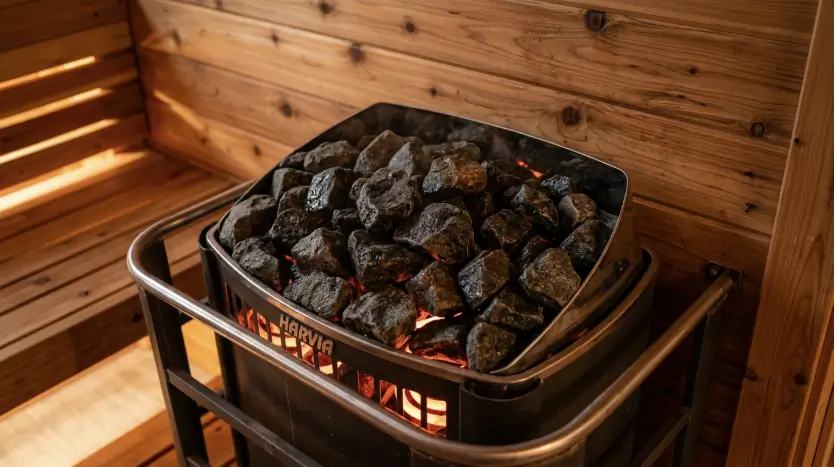
Rock capacity affects how much residual heat and humidity a heater can hold between water pours, which shapes how the session actually feels. Most home electric heaters call for 40 to 100 pounds of sauna-grade stones, loaded loosely enough for air to move through them; packing them too tightly reduces heat-up performance and can shorten element life. Clearance matters just as much for safety as for comfort: manufacturers specify a minimum guard rail distance from benches and walls, typically several inches on the sides and more in front, and skipping that spec is a fire-safety issue, not a style choice. A heater that is easy and safe to use tends to get used more, which loops back to the frequency the cohort studies actually measured.
Who Should Be Cautious Before Starting a Regular Habit?
A 2018 review in Mayo Clinic Proceedings pulled together findings across multiple sauna studies and reported a consistent pattern of cardiovascular associations, while also noting real contraindications: unstable angina, a recent heart attack, and pregnancy are all situations where sauna use carries genuine risk rather than a plausible benefit. Most of the underlying data also comes from Finnish populations that were already frequent sauna users before researchers began tracking them, which limits how directly the findings generalize to a first-time buyer in a different climate and culture. Anyone managing an existing heart or blood pressure condition should treat the research as a prompt for specific questions relevant to their own situation, not a green light to start heavy use immediately.
Frequently Asked Questions
Does the sauna research say anything about heater brand or wattage? No. The studies track bathing frequency, not equipment. The association is with regular dry-heat exposure generally, which is why holding a steady temperature matters more than any specific brand claim.
How many sessions a week are linked to the strongest association in the data? The biggest measured gap sits between once-weekly use and four to seven times a week, with two to three sessions landing in between. No study sets an exact minimum for an individual.
How big should a sauna heater be for a small home unit? A common starting rule is about 1 kW per 45 to 50 cubic feet of all-wood interior, adding roughly 20 percent for a glass wall or door. Undersized heaters recover heat slowly and often get used less.
Who should be careful before starting regular sauna sessions? The literature documents real contraindications, including unstable angina, a recent heart attack, and pregnancy. Anyone managing a heart condition should ask specific questions before starting a regular habit.
References
- Association between sauna bathing and fatal cardiovascular and all-cause mortality events, JAMA Internal Medicine, 2015
- Joint associations of sauna bathing and cardiorespiratory fitness on cardiovascular and all-cause mortality risk: a long-term prospective cohort study, Annals of Medicine, 2018
- Short-term effects of Finnish sauna bathing on blood-based markers of cardiovascular function in non-naive sauna users, Heart and Vessels, 2018
- Cardiovascular and Other Health Benefits of Sauna Bathing: A Review of the Evidence, Mayo Clinic Proceedings, 2018
By Megan Holbrook